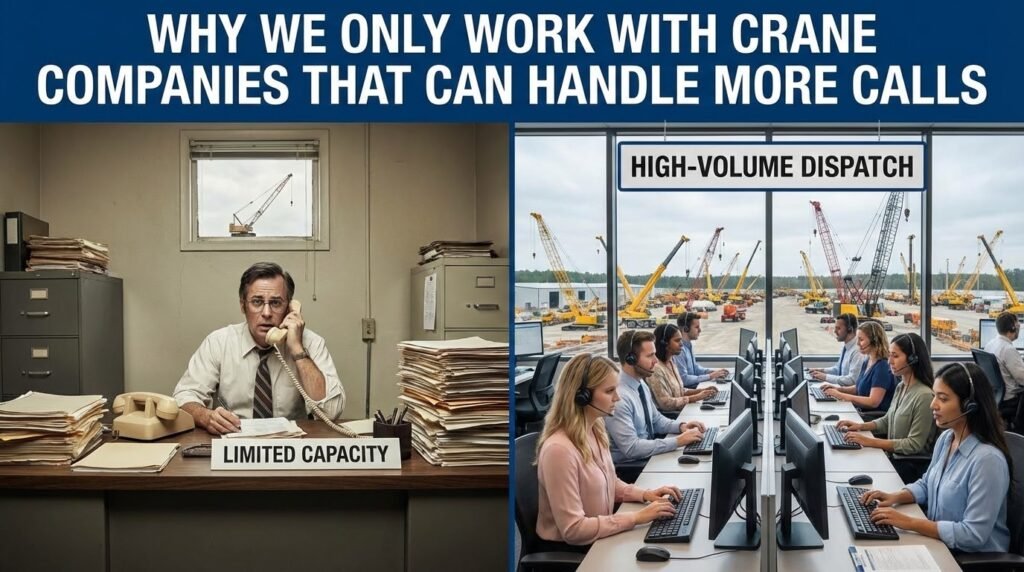
Imagine a massive construction project, steel beams reaching for the sky, and suddenly, a crucial crane operation needs immediate adjustment or a new booking. What happens if your call goes unanswered? What if you’re met with a busy signal or placed on an endless hold, while project deadlines loom large? For businesses reliant on precision heavy lifting, every moment counts. A lack of swift communication can bring an entire operation to a grinding halt.
For businesses relying on heavy lifting and precision logistics, every call is a potential project or critical update. In an industry where time is money and reliability is paramount, a crane company’s ability to efficiently manage communications isn’t just a convenience; it’s the backbone of its operational success and client satisfaction.
At our core, we understand the immense pressure and intricate coordination of modern construction operations. Delays from poor communication can ripple through a project, leading to significant financial losses and reputational damage. That is precisely why we commit to partnering only with crane companies demonstrating exceptional capacity to handle more calls, ensuring seamless communication every time. This supports successful construction projects and enhances operational efficiency.
This philosophy transcends merely answering the phone; it’s a holistic approach to customer service, operational excellence, and sustained business growth. Join us as we explore the critical reasons behind this commitment, detailing the tangible benefits for our projects, partners, and shared success in a demanding marketplace. We prioritize partners who value responsive crane services.
The Undeniable Link Between Call Handling and Business Growth in Heavy Industry
In the fast-paced world of heavy lifting and construction, swift, effective response to inquiries directly determines a crane company’s growth trajectory. A busy crane company receives numerous calls daily: new bids, scheduling changes, maintenance, safety, and urgent dispatch requests. Each interaction is a crucial touchpoint for business development.
A crane company struggling with call volume becomes reactive, constantly playing catch-up. This frustrates clients, strains relationships, and spreads a reputation for unreliability—devastating in an industry built on trust. Conversely, companies excelling in call management project professionalism and preparedness. This proactive approach leads to more successful construction projects, repeat business, and positive referrals, all driving sustainable business growth in the heavy equipment sector.
We believe superior call handling is a strategic investment in a business’s future, not an expense. It builds a robust infrastructure to support increased demand without sacrificing quality or customer experience. This foresight enables crane companies to scale operations, take on ambitious projects, and secure a larger market share for heavy lifting services.
The Cost of Missed Opportunities and Lost Business
Every missed call in the crane industry is a lost opportunity. Imagine a contractor needing an emergency crane for a tight timeframe. Two companies have voicemail; one answers immediately, understands the urgency, and dispatches a team. Which secures the heavy lifting job?
Missed calls mean lost revenue. Beyond single projects, persistent call handling issues damage reputation, deterring new clients and losing existing ones. Heavy industry clients demand reliability and responsiveness. Failing this, companies risk being blacklisted from future construction projects by competitors prioritizing effective communication.
Poor call handling also disrupts internal operations. Dispatchers miss updates, leading to scheduling conflicts or delayed equipment deployment. Project managers struggle with crane operators, causing bottlenecks. These inefficiencies cost money and erode morale. Thus, handling more calls is not just a customer service advantage; it’s fundamental to operational integrity for crane services.
Building Trust and Ensuring Client Satisfaction Through Responsive Communication
Trust is paramount in construction and heavy lifting industries. Clients need reliable, transparent, and accessible partners. Professional call handling is crucial for building this trust. Prompt, professional responses to queries or new project requests signal valuing their business and taking concerns seriously, fostering client loyalty.
Consider a client with a tight deadline needing crane availability confirmation. A quick, clear answer builds confidence. Conversely, chasing information creates anxiety and undermines faith in the crane company’s ability to deliver. Satisfied clients are the lifeblood of repeat business and positive referrals in the competitive heavy equipment services market.
Effective communication minimizes misunderstandings and costly errors. Clear communication during inquiries, scheduling, and updates prevents miscommunications on scope or timing. This proactive approach ensures projects run smoothly, on schedule, and within budget, leading to higher client satisfaction and stronger partnerships. Our crane partners prioritizing communication means fewer headaches and successful project outcomes.
Operational Excellence: How Efficient Call Management Fuels Performance
Beyond client benefits, robust call handling offers immense internal operational advantages. A crane company effectively managing high call volume is inherently more organized, efficient, and equipped for the dynamic heavy lifting sector. This operational excellence translates directly into smoother project execution, reduced downtime, and improved resource allocation, enhancing overall business performance.
Coordinating multiple simultaneous crane operations across sites involves managing operator schedules, equipment availability, transportation logistics, and safety protocols—all requiring precise communication. Efficient call handling ensures accurate information flow, empowering dispatchers, managers, and operators with real-time decisions. This prevents bottlenecks, minimizes delays, and optimizes expensive heavy equipment and skilled personnel.
Efficient call management systems often integrate data tracking. This allows crane companies to analyze call patterns, identify peak times, and understand client inquiries. These insights are invaluable for strategic planning, resource allocation, improved team training, and anticipating client needs. It’s a systemic approach to continuous improvement elevating the entire crane operation.
Streamlining Dispatch and Scheduling for Peak Efficiency
At the heart of any crane operation are its dispatch and scheduling capabilities. With numerous concurrent projects and unexpected needs, a well-oiled dispatch system is critical. Companies excelling in handling calls often integrate incoming calls with scheduling software, optimizing logistics for heavy equipment.
When a client calls to book a crane, representatives instantly check real-time availability, operator schedules, and equipment. This immediate access allows quick confirmations, minimizes errors, and prevents overbooking. Urgent requests receive rapid capacity assessment and realistic timeframes, boosting operational efficiency.
For instance, a sudden equipment breakdown on a construction site demands an immediate replacement crane. A company with superior call handling quickly identifies the closest available crane and qualified operator, dispatching them with minimal delay. This responsiveness mitigates costly project stoppages and reinforces the crane company’s reputation as a reliable heavy lifting partner.
Enhancing Internal Communication and Collaboration
Robust call handling benefits not just external calls, but internal communication within the crane company is equally vital. An effective system ensures accurate, prompt message relay between sales, customer service, dispatch, maintenance, and field operations. When the front line is integrated with the back end, the organization functions cohesively, fostering team collaboration.
If a client calls reporting site condition changes, the information logged into a shared system is instantly accessible by dispatch, the en route crane operator, and the project manager. This prevents using outdated information, averts potential safety hazards, and ensures everyone works with current data. Such seamless information flow minimizes miscommunications, delays, or even safety incidents in heavy lifting operations.
Crane companies investing in advanced call management tools find better team collaboration. Features like internal messaging, call forwarding, and comprehensive call logs create transparent communication. This fosters shared responsibility and efficiency, empowering team members with needed information. Less time tracking down data means more time on critical tasks, improving overall productivity.
Leveraging Technology for Superior Call Management
In today’s digital age, handling more calls isn’t just about a large operator team; it’s about leveraging the right technology. Modern call management solutions transform a crane company’s communication, streamline workflows, and enhance customer experience. From sophisticated phone systems to integrated CRM platforms, technology is pivotal in scaling call handling capabilities for heavy equipment services.
Cloud-based phone systems offer unparalleled flexibility and scalability, adapting to fluctuating call volumes without significant hardware investment. Features like Interactive Voice Response (IVR) efficiently direct callers, reducing wait times. Automatic Call Distribution (ACD) evenly distributes calls, preventing burnout and maximizing productivity for crane services.
Integrating call systems with CRM software provides representatives instant access to client history, past projects, and equipment preferences. This enables personalized interactions, making clients feel valued. Call recording and analysis offer invaluable data for training and service refinement. Embracing these advancements strategically positions a crane company for sustained success and unparalleled service in the construction industry.
Actionable Steps: Implementing a Robust Call Handling System
For any crane company enhancing its call handling capacity, a structured approach is crucial. Here are steps to boost operational efficiency:
- Assess Current System & Identify Bottlenecks: Audit existing call handling processes. Identify missed calls, hold times, and misdirections by reviewing logs and gathering feedback. This is the first step towards improving customer service.
- Invest in a Modern VoIP or Cloud Phone System: Transition from traditional landlines to a VoIP or cloud-based system. These offer IVR, ACD, call routing, and analytics, providing scalability and flexibility for growing heavy lifting businesses.
- Integrate with CRM Software: Connect your phone system with a CRM platform. This links every call to a client record, giving instant access to history and requirements. This integration ensures personalized, efficient service, enhancing client satisfaction.
- Develop Clear Call Scripts and Training Protocols: Equip teams with scripts for common inquiries and emergencies. Consistent training ensures professional handling, accurate information, and effective issue escalation, crucial for effective communication.
- Implement Call Recording and Analytics: Use call recording for quality assurance. Analyze data to identify trends and improve service. This data-driven approach optimizes staffing and refines communication strategies for better crane services.
- Regularly Review and Optimize: Call handling needs continuous review. Adjust your system based on performance feedback. As business grows and client needs evolve, adapt your call handling strategy for continuous operational excellence.
Case Study: The Turnaround of “Heavy Lift Solutions”
Heavy Lift Solutions, a mid-sized crane company, faced a bottleneck: undeniable expertise, but a failing phone system. Clients complained of long holds, dropped calls, and incorrect routing. New leads were lost, and existing clients struggled with urgent heavy equipment needs.
Recognizing this, Heavy Lift Solutions invested in a comprehensive cloud-based communication platform. They implemented an intelligent IVR system routing calls to specific teams (sales, dispatch, tech support). Integrating with their new CRM gave representatives instant access to client history, greatly improving responsiveness for crane services.
The results were transformative: call abandonment plummeted by 60%, and client satisfaction scores rose 45%. Sales saw a 25% increase in qualified leads converted to projects, directly due to faster, professional responses. Dispatch efficiency improved 30%. Heavy Lift Solutions recovered lost business and positioned itself for expansion, showcasing superior call handling’s profound impact on a crane company’s bottom line and reputation in the construction industry.
FAQs: Understanding the Importance of Crane Company Call Handling
Here are frequently asked questions about why effective call handling is crucial for crane companies and their clients in the heavy lifting sector:
1. Why is a crane company’s call handling capability so important to its clients?
A crane company’s effective call handling directly impacts project timelines, safety, and overall reliability. Clients need quick answers for bookings, urgent dispatches, and technical questions. Delays cause costly project stoppages or safety concerns on construction sites. Responsive call handling assures clients their needs are prioritized.
2. How does poor call handling affect a crane company’s reputation?
Poor call handling severely damages a crane company’s reputation. Missed calls, long holds, and unreturned messages create an image of unreliability. In an industry valuing trust and efficiency, this leads to lost business and declining client loyalty. It signals inability to manage complex construction projects effectively.
3. What specific technologies can help crane companies improve their call handling?
Technologies improving call handling include VoIP phone systems for scalability, IVR systems for routing, ACD for managing queues, and CRM software for integrating client data. Call recording and analytics tools also provide insights for training and improvement, all enhancing call management for crane services.
4. Can improved call handling lead to more sales for a crane company?
Absolutely. Improved call handling directly translates to more sales. When potential clients easily reach representatives, get prompt, professional assistance, they are more likely to convert. This speed and professionalism distinguish a company, leading to higher conversion rates for inquiries into confirmed heavy lifting services.
5. How does effective call handling contribute to a safer work environment for crane operations?
Effective call handling is critical for safety in crane operations. It ensures urgent safety calls—changes in site conditions, equipment malfunctions, emergencies—are communicated immediately and accurately. Rapid, clear communication prevents accidents, mitigates risks, and ensures safety protocols are followed. A reliable system directly contributes to a safer environment for heavy lifting operations.
Final Thoughts: The Cornerstone of Crane Industry Success
In the demanding heavy lifting sector, effective high-volume call handling is a strategic imperative, not just an administrative function. Every communication point, from first inquiry to final lift, shapes client perceptions, influences operational efficiency, and determines a company’s growth trajectory. Partnering with crane companies excelling in this area is a foundational requirement for successful project delivery and sustained business excellence.
By prioritizing seamless communication, these companies ensure client satisfaction, build enduring trust, and foster internal efficiency, collaboration, and safety. They leverage technology to streamline operations, enhance responsiveness, and maintain a competitive edge. This commitment enables them to convert more leads, retain more clients, and navigate industry complexities with agility and confidence in providing top-tier crane services. For us, working exclusively with crane companies demonstrating this exceptional capacity underscores our commitment to excellence. It guarantees our projects benefit from uninterrupted service, precise coordination, and partners as reliable as their equipment. It’s an investment in a future where efficiency, safety, and client satisfaction are consistent realities in all heavy lifting operations.